


To capture Mehretu’s signature look dense architectural layering, explosive ink marks, and a massive sense of sweeping scale here is what you’ll want to have on your table:
For the Digital Artist (Procreate/Photoshop)
The "Technical Overlay" Brush Set: Mehretu uses intricate, structural line work beneath her colorful abstractions. Look for crisp drafting pens, Fine Liners, and Geometric Grid brushes to create a solid, mapping foundation.
A "Translucent Wax" Layering Trick: To get that deep, multi-layered look she achieves with acrylic resin, build your artwork across 20+ layers, adjusting the opacity of middle layers to 40–50% so the background elements barely peek through.
The Motion Blur & Airbrush Tools: Essential for beginners to create those sweeping, smoke-like fields of vibrant color that drift over the structural blueprints like a passing storm.
A Split-Screen Reference: Keep an architectural blueprint or a city map open on one side of your screen to use as a chaotic background tracing guide while you layer your own expressions on top.
For the Traditional Artist (Acrylics/Mixed Media)
Large Format Paper or Canvas: Mehretu works on a colossal scale. To catch her energy without feeling cramped, work on the largest sheet of mixed media paper or canvas board your workspace can safely hold.
Fluid Acrylics and India Ink: You’ll want high-flow mediums that glide effortlessly—Carbon Black ink, transparent glazing mediums, and vivid fluid acrylics in neon pinks, deep blues, and sunny yellows.
Drafting Pens and Airbrushes: Use ultra-fine technical pens or markers to draw precise architectural lines, combined with diluted acrylic spray bottles to add soft, cloud-like veils over your ink marks.
A Tracing Pad for Grids: Before painting, use a notebook to doodle intersecting grid lines, flight paths, and weather patterns to see how lines look when they crash into each other.
💡 Beginner Tip: If you’re just starting your Artist Study series, don’t feel overwhelmed by the complexity of her layers. Mehretu’s genius isn't in keeping everything perfectly neat it's in knowing how to build a beautiful, organized chaos where every mark has a voice.
Mehretu didn’t just paint abstract shapes; she mapped the energy of human history, geography, and social movement. In a world that tries to categorize everything into neat little boxes, Mehretu's work stands as a timeless reminder that our lives are beautifully complex, deeply layered, and constantly in motion.
🌌 The Life Behind the Lens
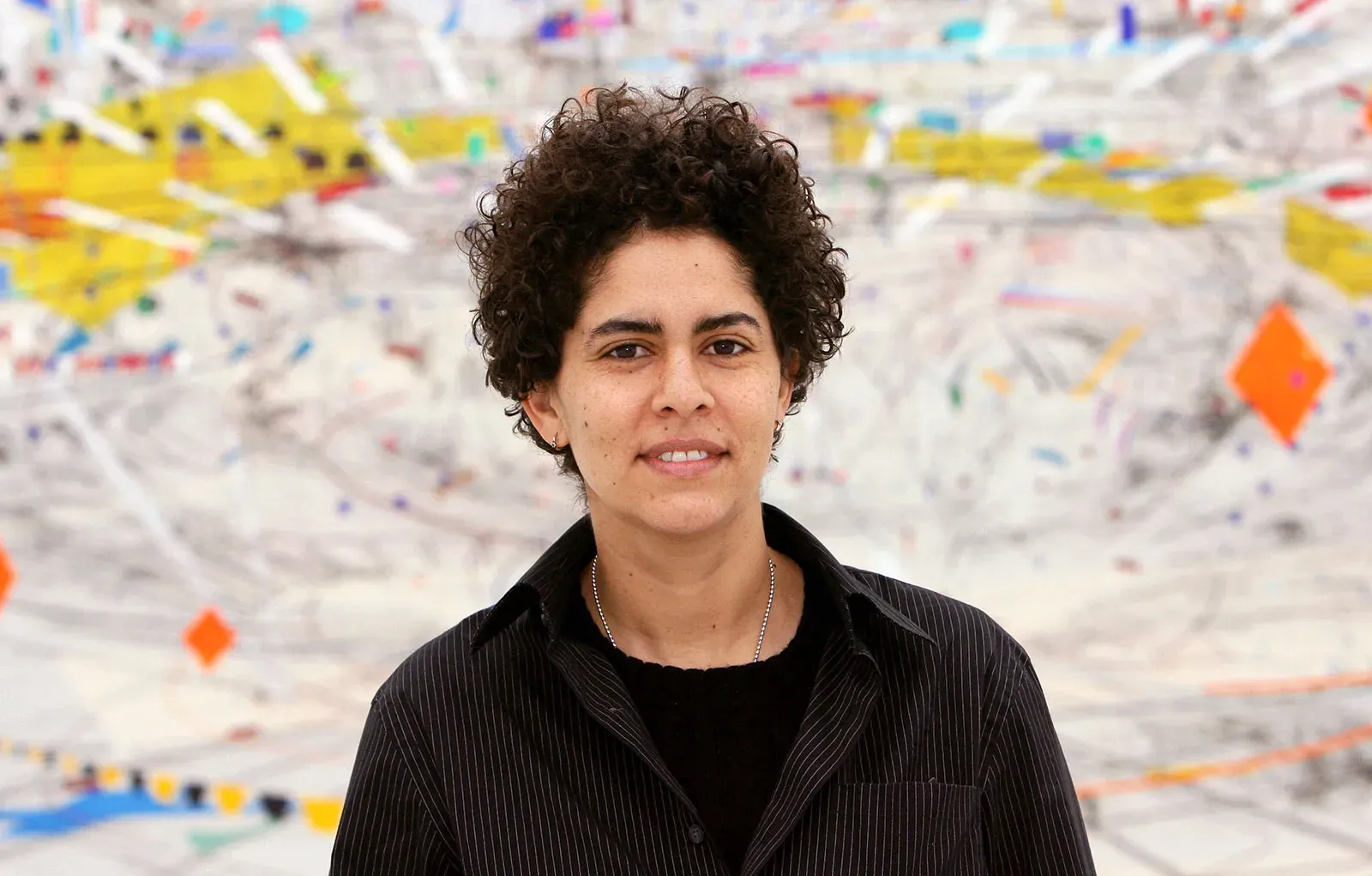
Born in Addis Ababa, Ethiopia, Julie Mehretu moved to the United States as a child, an experience of migration that deeply influenced how she views maps, borders, and spaces. Her massive paintings are created through an intense, physical process involving teams of assistants, layers of transparent acrylic gel, and thousands of hand-drawn marks.
It was through observing the constant changes in global cities, protest movements, and architectural history that she found her unique visual language. Treating her canvases like abstract archaeological sites, she sands down older layers of paint to expose the history beneath. Her art is a human-first exploration of how past events leave permanent marks on our present world.
🎨 Techniques: Architectural Underlays & Mark-Making Explosion
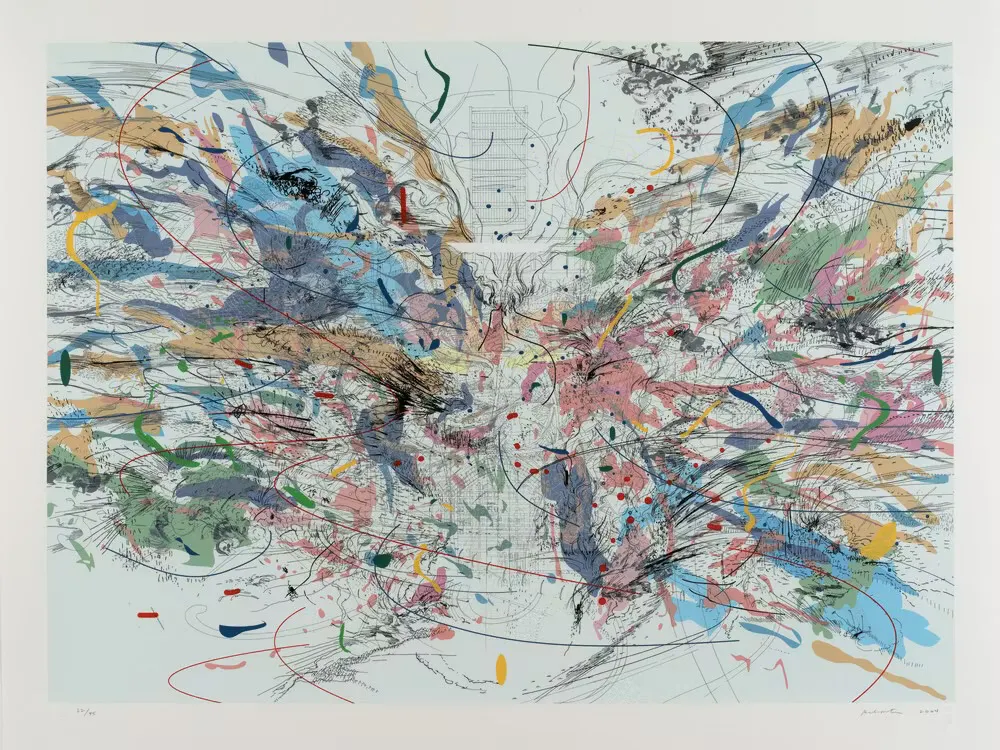
Mehretu’s style is a masterclass in spatial depth and chaotic energy. Here is what made her work so distinct:
The Layered Resin Glaze: She builds her paintings by layering ink drawings on top of architectural plans, then sealing them under a clear acrylic gel before painting another layer on top. This creates a mesmerizing 3D depth where lines float at different levels.
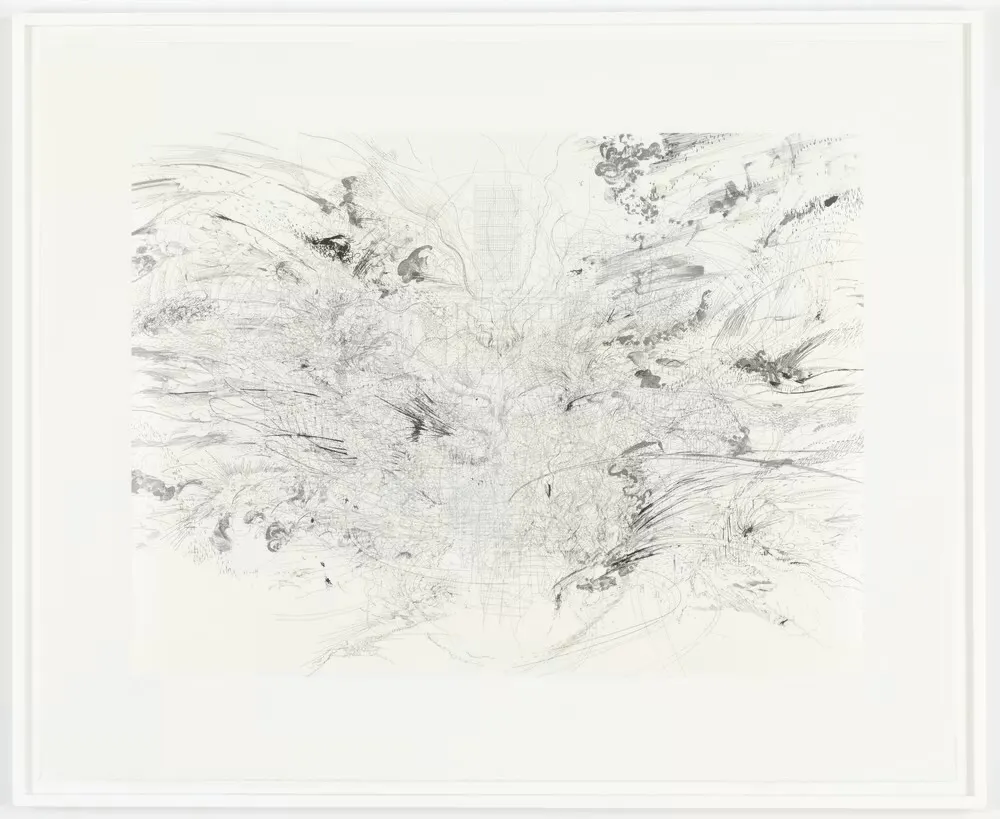
The "Social Matrix" Grids: Deep within her paintings lie the literal bones of city plans, stadium blueprints, and airport maps. These structured lines represent the systems that humans build to organize society.
The Calligraphic Storm: On top of her rigid geometric structures, she unleashes an explosion of freehand, calligraphic marks, brush strokes, and spray-painted bursts. These marks represent individual human energy, rebellion, and emotion breaking free from societal constraints.
✨ How to "Mehretu" Your Own Art (Beginner Tips)
You don’t need a massive warehouse studio to use Mehretu’s incredible layering techniques in your digital or traditional work. Here’s how to start:
Layer Your Personal History: Next time you start an artwork, begin by sketching a simplified map of your childhood neighborhood or the blueprint of your bedroom on the very bottom layer. Then, turn the opacity down until it's a ghost image, and paint your main abstract thoughts directly over it.
Create a "Sand Down" Effect: In your digital program, use a low-opacity eraser with a textured edge to gently scratch away parts of your top layer. Revealing hints of the colors and lines buried beneath isn't "ruining" the piece—it's a powerful storytelling choice that shows your artwork has a rich history.
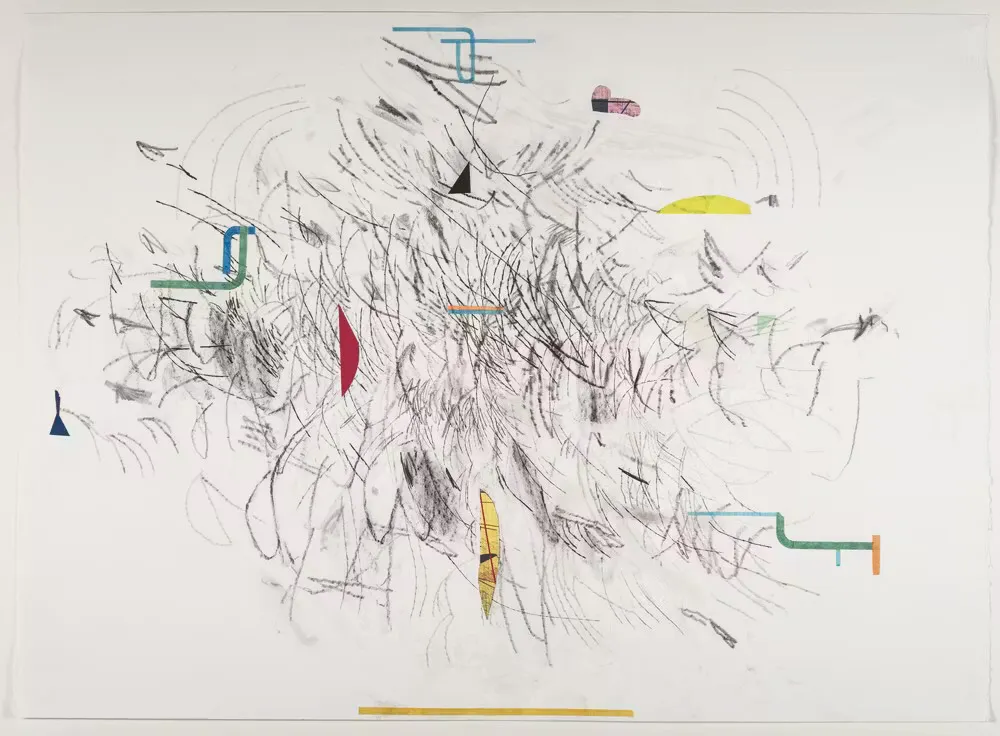
Contrast Order and Chaos: Spend 10 minutes drawing rigid, clean geometric shapes using a technical pen tool. Then, switch to a wild, loose paint brush tool and violently splash vibrant colors across the lines to watch the structure and chaos collide.
📚 Resources for Your Journey
Virtual Visit: Look through the online collections of the Whitney Museum of American Art to explore her massive, multi-panel retrospectives in high resolution.
Watch: Art21 featured documentaries tracking Julie Mehretu’s studio process to see exactly how she uses projection, masking tape, and sanding machines to build her pieces.
Tools: Look for "Drafting Blueprint" or "Technical Ink" brush packs for Procreate to give your initial layout layers a sharp, industrial feel.
📝 Artist Reminder: Mehretu’s work proves that we don't need to simplify our thoughts or emotions to make them understandable to the world. Let your art be as loud, layered, and magnificently complex as you are.
