


To capture De La Tour’s signature look: smooth geometric shapes, a single glowing flame, and absolute, peaceful quiet—here is what you’ll want to have on your "café table."
For the Digital Artist (Procreate/Photoshop)
The "Soft Blending" Brush Set: De La Tour’s candlelit scenes feature incredibly smooth, warm transitions from light to dark. Look for brushes labeled Soft Pastel, Airbrush, or Smooth Acrylic.
A "Warm Ambient" Color Palette: To capture that timeless candlelit glow, restrict your color selection primarily to rich terracottas, deep burgundies, warm oranges, glowing yellows, and absolute, pitch blacks.
The Alpha Lock Feature: Perfect for beginners practicing De La Tour's clean, stylized shapes. It lets you paint smooth gradients inside your subject without accidentally spilling over the edges.
A Real Candle (or LED Flame): Place a safe candle or phone light right next to your tablet in a dark room. Watch how the warm light wraps around your hand or an object, turning the edges vibrant orange before dropping off into shadow.
For the Traditional Artist (Acrylics/Gouache)
Smooth Panels or Canvases: Unlike Rembrandt’s rough textures, De La Tour painted with a glassy, polished surface. Look for smooth wood panels or fine-grain canvas boards.
A Stripped-Back Palette: Keep it simple and low-pressure. You only need Ivory Black, Burnt Umber, Cadmium Red, Cadmium Yellow, and a warm Zinc White.
Mop & Filbert Brushes: Soft, rounded brushes are essential for feathering out the edges of your paint to create that magical, smoke-like transition from a bright flame into total darkness.
A Geometry Sketchbook: Use a notebook to practice simplifying complex objects or figures into basic shapes (cylinders for arms, spheres for heads) before you start painting.
If you’re a beginner just starting your Artist Study series, remember that De La Tour's focus was simplicity. You don't need to stress over complex lace, jewelry, or backgrounds—his art is an invitation to strip away the noise.
🕯️ The Life Behind the Lens
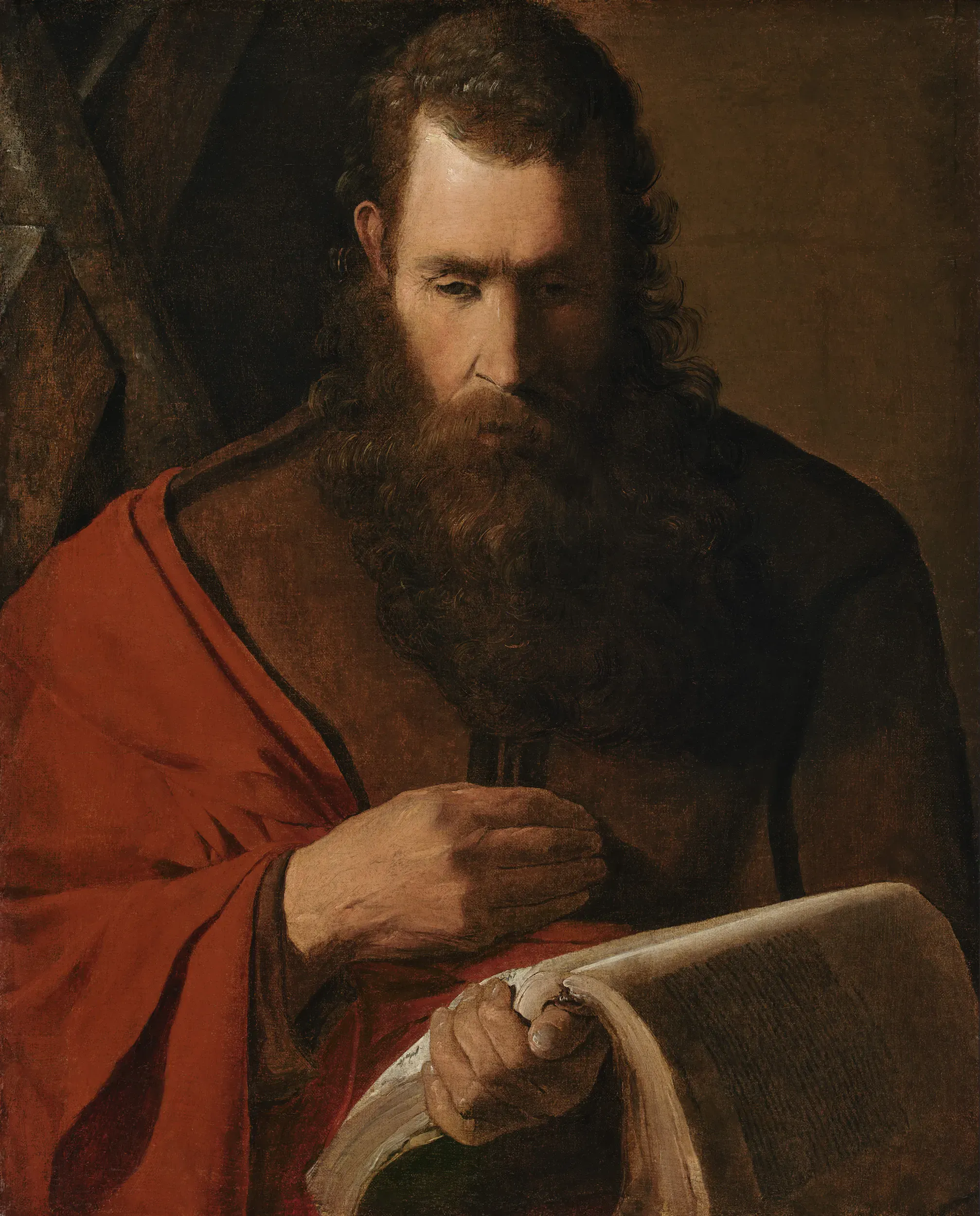
Georges de La Tour operated in the regions of Lorraine, France, during a century devastated by war, plague, and religious upheaval. Because his studio was located in a turbulent borderland, much of his life story and many of his paintings were physically lost to history for centuries before being rediscovered.
Living through an era of constant external chaos, De La Tour turned inward. He stopped painting grand, chaotic battle scenes or busy landscapes, choosing instead to paint intimate, nocturnal spaces lit by a single candle. His art wasn't about documenting the loud world outside; it was a quiet survival mechanism designed to capture a sense of sanctuary, peace, and internal reflection.
🎨 Techniques: Single-Source Nocturnes & Simplified Geometry
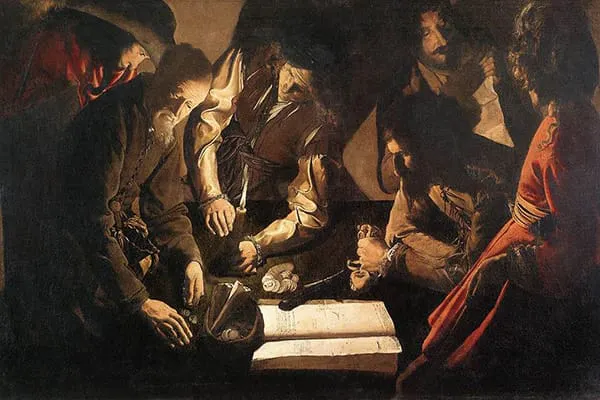
De La Tour’s style is a masterclass in atmospheric minimalism and warm contrast. Here is what made his work so distinct:
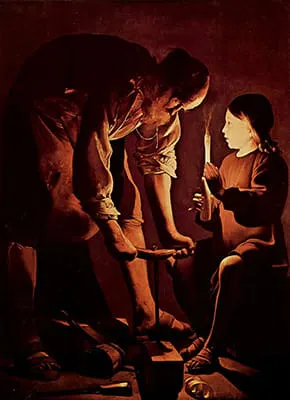
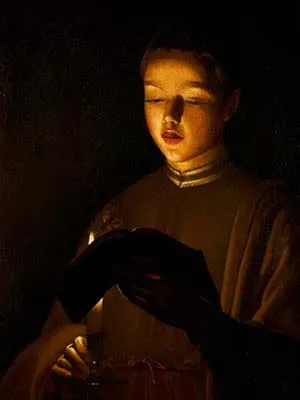
Single, Localized Light Sources: Almost all of his night paintings are illuminated solely by a candle, a lantern, or a tiny oil lamp. Often, a character's hand is placed directly in front of the flame, creating a stunning, translucent orange glow as the light shines right through their skin.
Simplified, Monumental Shapes: He stripped away unnecessary, fussy details. He smoothed out wrinkles, simplified clothing into broad folds, and treated human limbs like elegant, geometric cylinders, making his figures look like beautiful, quiet statues.
The Quiet Palette: By drowning the background in a unified, deep black void, he used an entirely warm color palette to make the candlelit subjects feel incredibly cozy, safe, and close to the viewer.
✨ How to "De La Tour" Your Own Art (Beginner Tips)
You don’t need to be an expert to use De La Tour’s soothing, atmospheric techniques in your digital or traditional work. Here’s how to start:
Simplify to Amplify: Next time you sketch a subject, deliberately erase or leave out minor details like clothing patterns, extra background objects, or stray hairs. Keep your lines clean and your surfaces smooth. Let the simple shapes do the heavy lifting.
Hide the Light Source: Try painting a scene where the candle or light bulb is hidden behind a hand, a book, or an object. Focus entirely on painting the gorgeous, warm glow that spills around the obstruction and illuminates your subject's face.
Create a Sanctuary Space: Use a completely solid, dark background to block out the outside world. This immediately draws the viewer into a private, intimate moment with your subject, shifting the focus to pure emotion and quiet contemplation.
📚 Resources for Your Journey
If you want to go deeper into De La Tour’s world, check out these favorites:
Virtual Visit: Explore the digital collections of The Louvre in Paris to view his most famous masterpiece, The Penitent Magdalene, and study its smooth gradients.
Read: Art history essays on the Caravaggisti movement to see how artists across Europe took inspiration from high-contrast lighting to create moody art.
Tools: Experiment with the basic Airbrush or Soft Blend tools in Procreate to practice creating a seamless, glowing gradient that radiates outward from a single point.
Artist Reminder: Georges de La Tour’s work proves that when the world around us is loud and uncertain, we have the power to create our own light. Pull up a chair, dim the lights, and let your canvas be a quiet place to rest.
