


To capture Frida’s signature look : bold colors, fine details, and raw texture—here is what you’ll want to have on your "café table."
For the Digital Artist (Procreate/Photoshop)
The "Dry Media" Brush Set: Frida worked primarily in oils and Masonite. Look for brushes labeled Gouache, Oil Paint, or Dry Palette. These give you that slightly textured, "un-digital" look.
A "Grainy" Overlay: To get that vintage film glow we love, keep a high-res paper texture or film grain overlay on your top layer at 10–15% opacity.
The Symmetry Tool: Great for beginners practicing Frida’s iconic self-portrait compositions. It helps you get the balance right while you focus on the details.
A Reference Mirror: Even in digital art, having a small physical mirror next to your tablet helps you study your own expressions and "unfiltered" details in real-time.
For the Traditional Artist (Acrylics/Gouache)
Small to Medium Canvases: Frida often worked small (12×15 inches or less). Small canvases make the project feel less intimidating and more like a personal diary entry.
Heavy Body Paints: You’ll want vibrant colors—Deep Magenta, Yellow Ochre, Cobalt Blue, and Sap Green.
Fine-Liner Brushes: To capture the tiny details in the "flora and fauna" (the veins in leaves, the fur on monkeys, or individual hairs).
A Sketchbook for Symbolism: Before touching the canvas, use a notebook to doodle symbols that represent your "hidden" feelings (thorns, ribbons, roots, etc.).
If you’re a beginner just starting your Artist Study series, don’t feel like you need the most expensive supplies. Frida started with a simple lap easel and a set of paints while lying in bed. The best material you have is your own story.
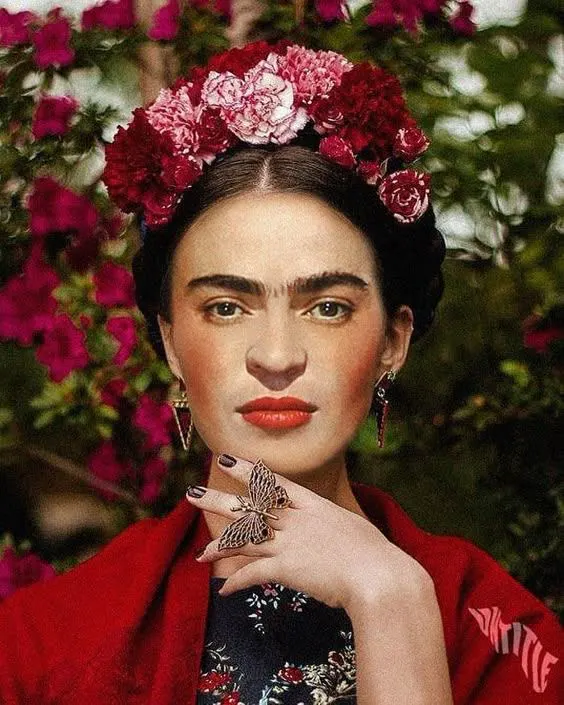
Frida didn’t just paint portraits; she painted her reality. In a world that often asks us to "filter" our lives, Frida’s work stands as a timeless reminder that our most vulnerable details are often our most beautiful.
Frida’s journey was defined by a blend of vibrant culture and immense physical pain. After a life-altering accident in her youth, she spent much of her life in and out of surgeries and bedrest.
It was during these periods of isolation that she found her voice. With a mirror above her bed and a lap easel, she began to explore the one subject she knew best: herself. Her art wasn't a hobby; it was a survival mechanism.
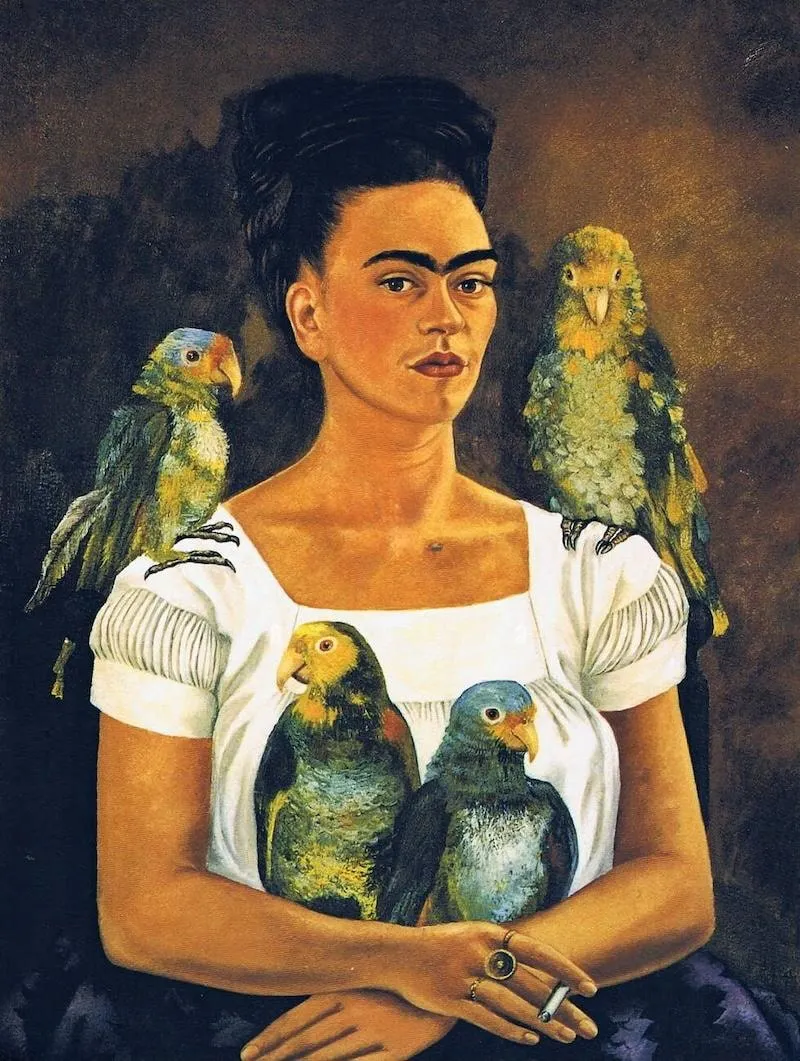
Me and My Parrot, 1941 by Frida Kahlo
Frida’s style is a masterclass in Surrealism and Mexican Folk Art. Here is what made her work so distinct:
Vibrant Symbolism: She used animals (monkeys, parrots, deer) and nature to represent her emotional state. A hummingbird often symbolized hope or love, while thorns represented her pain.
The "Unfiltered" Palette: She didn't shy away from "clashing" colors. Deep magentas, earthy terracottas, and bright teals created a visual rhythm that felt alive.
Intimate Scale: Many of Frida’s paintings are small and detailed. This creates an "overlooked" intimacy you have to lean in to truly see what she’s telling you.
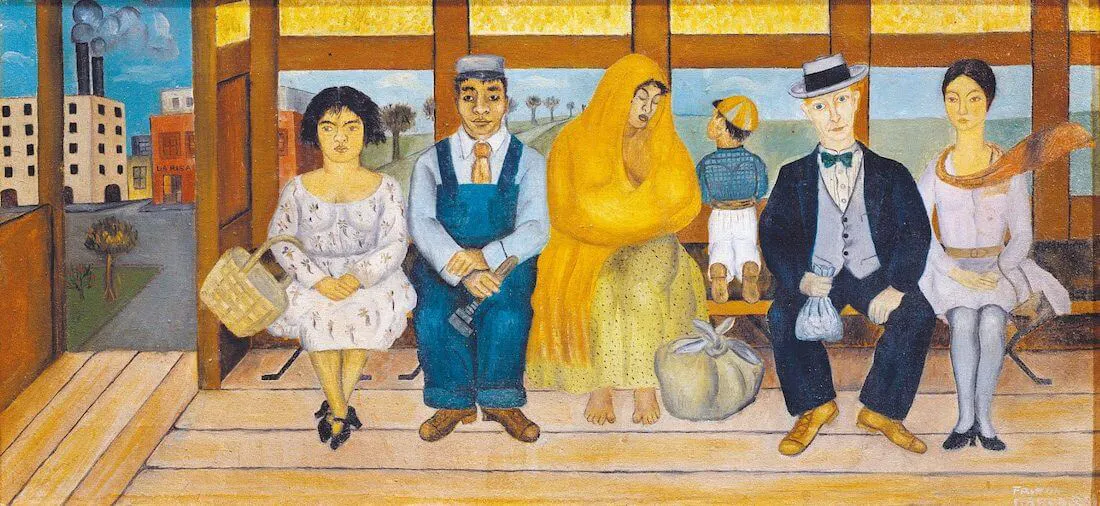
The Bus, 1929 by Frida Kahlo
You don’t need to be a master painter to use Frida’s techniques in your digital or traditional work. Here’s how to start:
Paint the "Hidden" Feeling: Next time you draw a portrait, ask yourself: What is this person feeling that they aren't saying? Use a symbol (like a storm cloud, a flower, or a specific animal) to represent that emotion in the background.
Embrace the "Imperfections": Frida famously painted her unibrow and facial hair as an act of self-love and defiance. In your work, don't smooth out every "flaw." Let the messy lines or the "grainy" textures tell the truth.
Frame Your Subject: Frida often used lush, tropical greenery to "frame" her portraits. Try using leaf brushes or floral patterns at the edges of your canvas to create depth and focus.
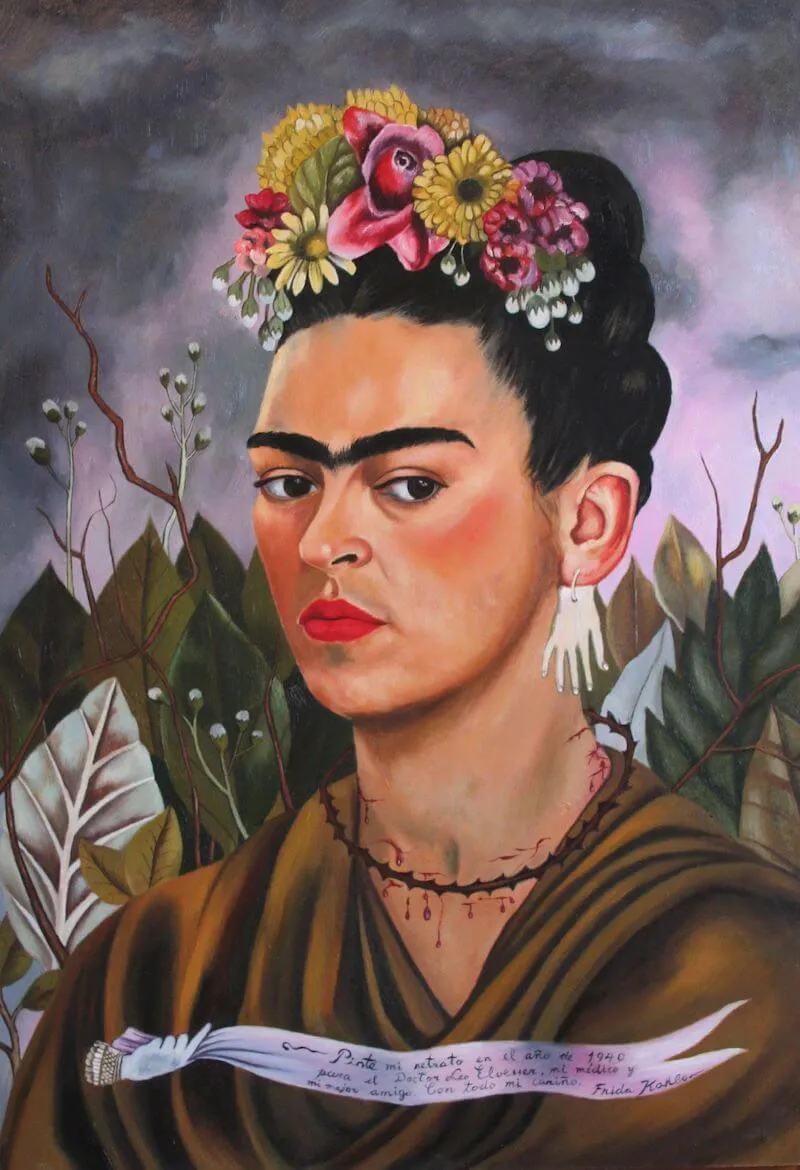
Self Portrait, Dedicated to Dr Eloesser, 1940 by Frida Kahlo
If you want to go deeper into Frida’s world, check out these favorites:
Virtual Visit: Take a digital stroll through La Casa Azul, her home in Mexico City.
Watch: The 2024 documentary Frida for a look at her personal diaries and letters.
Tools: Look for "Gouache" or "Dry Media" brush packs for Procreate to mimic her traditional, textured brushstrokes.
Artist Reminder : Frida’s work proves that you don't need a massive studio or perfect health to create something that changes the world. You just need a mirror and the courage to look into it.
